
Welcome to the Albumin Website

This website will feature discoveries regarding serum albumin, the most prevalent protein of the blood plasma. It contains an updated list of published albumin mutations with references, accession numbers for nucleotide sequences, the list of registered cases of analbuminemia with references, plus news items of general interest regarding albumin. Comments, corrections, and news items are invited; please send to tedp@stny.rr.com.  General details about albumin are available in a recent single-author book,

"All about Albumin. Biochemistry, Genetics, and Medical Applications",

by Theodore Peters, Jr., 452 pp. Over 2000 references.

Academic Press, San Diego, 1995, ISBN 0-12-552110-3. $135.95 US.

It has recently had a 2nd printing.

To receive a copy of Errata for the book, please e-mail the author at the above email address.  

=

To order call 1-800-545-2522 (USA), or see www.us.elsevierhealth.com


NOTICE: Readers who wish access to T. Peters' 13,000-reference albumin file for scientific use are welcome to contact him at the email address given in the first welcoming paragraph.

1. CLINICAL USE OF ALBUMIN:  For news concerning the clinical use of albumin (HSA Fraction V) we refer you to the website of the Plasma Protein Therapeutics Association


2. PROPERTIES OF HUMAN ALBUMIN

  Molecular mass (calc'd)

66438.0 Da

  Molecular dimensions

 30 X 30 X 80 Å

Isoelectric point, 0.15 M NaCl

5.16

Isoelectric point, defatted

 5.8

Absorbance 279 nm, 1 mg/mL

0.531


ALBUMIN ATOMIC COORDINATES

Atomic coordinates for the tertiary structure of human albumin are available at the GenBank DNA database at www.ncbi.nlm.nih.gov . Choose "Structures". To view coordinates, use RasM.1 Chime (Sayle, RA, TIBS 20, 374, 1995.)


Files are:

*Human serum albumin 2.5Å, Sugio,S., #1AO6, 18 July 1997.

Recombinant human serum albumin, 2.5Å, #1BM0, Sugio, S., 1998.

Recombinant human serum albumin, 2.8Å, #1UOR, Carter, D.C., 10 March 1998.

Recombinant binding subdomain, residues 213-265, by NMR. #1PRB, Johansson, M.U., 1997.

Recombinant human serum albumin + myristate, 2.5Å, #1bj5, Curry,S., 1998.

Recombinant human serum albumin + myristate + TIB, 2.5Å, #1bke, Curry, S., 1998.

Recombinant human serum albumin. 2.6Å, #1e78, Bhattacharya, A.A., 2000a.

Recombinant human serum albumin + propofol, 2.2Å, #1e7a, Bhattacharya, A.A., 2000a.

Recombinant human serum albumin + halothane, 2.4Å, #1e7b, Bhattacharya,A.A., 2000a.

Recombinant human serum albumin + myristate + halothane, 2.4Å, #1e7c, Bhattacharya, A.A., 2000a.

Recombinant human serum albumin + decanoate, 2.5Å, #1e7e, Bhattacharya, A.A., 2000b.

Recombinant human serum albumin + dodecanoate, 2.45Å, #1e7f, Bhattacharya, A.A., 2000b.

Recombinant human serum albumin + myristate, 2.5Å, #1e7g, Bhattacharya, A.A., 2000b.

Recombinant human serum albumin + palmitate, 2.44Å, #1e7h, Bhattacharya, A.A., 2000b.

Recombinant human serum albumin + stearate, 2.7Å, #1e7i, Bhattacharya, A.A., 2000b.

Recombinant human serum albumin + oleate, 2.4Å, #1GNI, Petipas, I., 2001a.

Recombinant human serum albumin + arachidonate, 2.6Å, #1GNJ, Petipas, I., 2001a.

Recombinant human serum albumin + myristate + R(+)warfarin, 2.5Å, #1HA2, Petipas, I., 2001b.

Recombinant human serum albumin + myristate + S(-)warfarin, 2.5Å, #1H9Z, Petipas, I., 2001b.


*This sequence was among the top 17 requested proteins (PDB Newsletter, Apr., '99).


3. ALBUMIN AND RELATED DNA SEQUENCES


 Albumin and Related Protein Sequences

 Superfamily member

 Entrez Protein Accession Number

 Albumins

 Bovine ALB

P02769

 Canine ALB

CAB64867

Cavia porcellus

AAQ20088

Chicken ALB

 P19121

Cobra ALB

S59517

Ecm 1  (osteogenic mouse embryogenic cell line

ENDO 16 (related calcium-binding sea urchin protein)

L33416

L34680 (see GeneBank)

Equine ALB

P35747

Feline ALB

P49064

Frog (X. laevis) 68 kDa ALB

ABXL68

Frog (X. laevis) 74 kDa ALB

ABXL72

Frog (R. catesbeiana) ALB

P21847

Frog (R. shgiperica) ALB

AAD09358

Gerbil ALB

JC5838

Human ALB

ABHUS

Lamprey ALB

Q91274

Lamprey AS Protein

AAC63407

Lungfish (Neoceratodus fosteri)

P83517

Macaque ALB

Q28522

Mouse ALB

P07724

Pig ALB

AAT98610

 Platyhelminth (Schistosoma mansoni)

AAL08579

Rabbit ALB

P49065

Rat ALB

P02770

Salamander (Ambystoma maculatum) ALB

AAL56646

Salmon ALB1

P21848

Salmon ALB2

Q03156

Sheep ALB

P14639

 Tuatara (Sphenodon punctatus) ALB

AAM46104

Alphafetoproteins

Chimp AFP

JC4258

Equine AFP

P49066

Gorilla AFP

Q28789

Human AFP

P02771

Mouse AFP

AAH66206

Rat AFP

P02773

Alpha-Albumins

Human ALF

P43652

Mouse ALF

O89020

Rat ALF

P36953

Vitamin D Binding Proteins

Human DBP

P02774

Mouse DBP

P21614

Rabbit DBP

P53789

Rat DBP

P04276


4. ALBUMIN STRUCTURE     ??INCLUDE SEQUENCE DIAGRAM HERE//


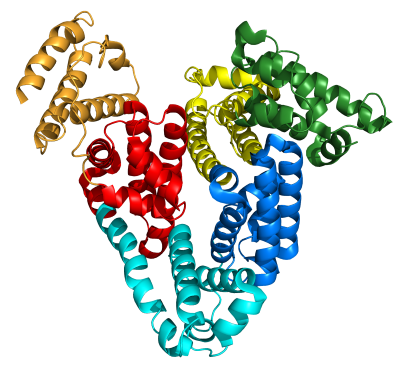
Human serum albumin is a single peptide chain of 585 amino acids, held in three homologous domains by 17 disulfide bonds.  Within each domain are two long loops plus one shorter loop. The S-S bonds  provide stability while the intervening peptide strands allow for flexibility.  The configuration includes 67% alpha helix and 10% beta turn.


PHYSICAL CHEMICAL DATA SUPPORT HEART-SHAPED STRUCTURE FOR ALBUMIN IN SOLUTION - Ferrer, M.L., Duchowicz, R., Carrasco, B., Garcia de la Torre, G. & Acuna, U. (Biophys. J. 80:2422-2430, 2001) measured the rotational correlation time of bovine albumin complexed to the dye, erythrosin, and calculated hydrodynamics by bead-modeling methods. From both studies they concluded that the overall conformation of albumin in neutral solution is rigid and very similar to the 80x80x80x30 heart-shaped structure derived from crystallography of human albumin. Uncertainties or ambiguities in the earlier interpretation of hydrodynamic data are felt to have led to the classic linear, cigar-shaped model, which will probably fade into oblivion as the oblate model prevails over the familiar prolate one.


Two eminent protein chemists have published articles historically related to the structure of albumin from the physical chemical standpoint. C. Tanford. "Cohn and Edsall physical chemistry conclusively supports a protein model" Biophys.Chem. 100 (1-3):81-90, 2003. J. L. Oncley. "Dielectric behavior and atomic structure of serum albumin." Biophys.Chem. 100 (1-3):151-158, 2003.


Accessibility to solvent by hydrogen exchangeability.  Grdadolnik, J., and Marechal, Y., have measured hydrogen-deuterium exchange in bovine serum albumin protein by Fourier transform infrared spectroscopy in kinetic studies (Applied Spectroscopy 59 (11):1357-64, 2005).  They propose that some parts of the molecule are completely inaccessible to water.


Albumin structure is affected even by concentrations of urea found in vivo.  Gull, N., et al.  Effect of physiological concentration of urea on the conformation of human serum albumin.  (J.Biochem.141(2):261-268, 2007).  Urea at 10 mM (60 mg/dL) caused an 8% increase in helicity.


5. LIGAND BINDING


Albumin has been likened to a sponge, and  M. Fasano, M., et al., ( IUBMB Life 57 (12):787-796, 2005) have reviewed how it binds numerous ligands at different sites in its three domains, provides a depot for some, holds toxins so they are harmless,  and holds others in strained orientations leading to metabolic changes. 

Many drugs interact with albumin, as reviewed by Otagiri, M. (Drug. Metab. Pharmacokinet. 20:309-323, 2005.).

Stereoselective binding is reviewed by Chuang, V.T., & Otagiri, M. (Chirality 18:159-166. 2006.)S

Binding sites for long-chain fatty acids - Bhattacharya, A. A., T. Grüne, and S. Curry (J. Mol. Biol. 303 (5):721-732, 2000) show crystallographic rHSA structures in color at ~2.5Å identifying 7 binding sites for long-chain fatty acids and a total of 11 sites for medium-chain fatty acids. Huang, B.X., Dass, C., and Kim, H-Y. (Biochem J. 387: 695-702, 2005) have used ESI-MS along with cross-linking of lysine residues to show a conformational change in Lys-402 of subdomain IIIA or Lys-541 of subdomain IIIB upon binding of an unsaturated fatty acid.


Zinc-binding site - A. J. Stewart et al. (Proc. Natl. Acad. Sci. USA 100: 3701-3706, 2003) have found that zinc (ZnII) binds at an interdomain site on human albumin. This is a five-coordinate site between domains I and II, using N ligands H67 and H247 and O ligands Q99, D249, and H2O. Agte, V. V., and Nagmote, R. V. (Biofactors 20:139-145, 2004) reported the effect of five vitamins on the affinity of zinc for albumin.


Affinity for copper(II) – Most albumins bind Cu(II) at their N-terminal Asp-X-His site with extremely high affinity.  This affinity had now been measured as 1 pM (Rozga, M., et al., J. Biol. Inorg. Chem. 12 (6):913-918, 2007).


S-Nitroso compounds and albumin. Jourd'heuil, D., et al ( Free Radical Biol. Med. 28(3):409-417, 2000) observed that low molecular weight nitrosothiols (cysteine and glutathione) quickly disappear in plasma and appear as S-nitroso-albumin. The albumin is said to act as a sink for NO(+) and as a modulator for its transfer from the vessel wall to red cell hemoglobin. Marley, R., et al.,(Free Radical Biol. & Med. 3: 688-696, 2001) found S-nitroso-albumin to form quickly and reach the 400-1000 nM range.


N-Homocysteinylation of albumin. Glowacki, R., and Jacubowski, H., (J. Biol. Chem. 279: 10864-10871, 2004) have shown that homocysteine thiolactone, formed from methionyl-tRNA, and S-nitrosohomocysteine, formed in endothelial cells, link covalently to blood proteins, particularly hemoglobin and albumin. The e-nitrogen of Lys-525 is a predominant site of attachment to HSA. The presence of a mixed disulfide at Cys34, alb-S-S-Cys, accelerates the attachment.


Familial dysalbuminemic hyperthyroxinemia (FDH) - Petersen, C. E., et al. (Chem. Biol. Interact. 124: 161-172, 2000) found the affinity for warfarin in the two natural mutants for FDH, R218P and R218H, to be decreased about 5-fold owing to alterations in drug binding site I.  Petitpas et al., (Proc. Natl. Acad. Sci. USA 100: 6440-6445, 2003) found that the substitution for Arg caused a relaxation on steric restrictions at this site.


Hemin binding site - Zunstain, P. A., Ghuman, J., Komatsu, T., Tsuchida, E., and Curry, S. (BMC Structural Biology, 3:6, 2003 ­ electronic journal) studied the crystal structure of HSA-heme-myristate and found the hemin to bind to a narrow D-shaped hydrophobic cavity which usually binds a fatty acid. Tyr161 coordinates the hemin iron atom. Monzani, E., et al. (Biochim. Biophys. Acta 1547, 302-312, 2001) observed binding of hemin to HSA with UV-Vis, CD and NMR, and demonstrated a peroxidative action on phenolic compounds. Komatsu, T., et a., (J.Am.Chem.Soc. 127 (45) 15933-15942, 2005) measured the O2 and CO binding properties of heme complexes of albumin mutants.  Mn (III) heme binds with lower affinity than Fe(III) heme, but its affinity is increased markedly in myristate is also bound (Fanali, G., et al. FEBS J. 272: 4672-4683, 2005).


Heme-albumin as an oxygen carrier. Tsuchida, E., et a.,l (Bioconjugate Chem. 11:46-50, 2000) report the addition of 4 heme groups to the HSA molecule, allowing it to deliver oxygen to tissues of a rat after a 70% exchange transfusion. T. Komatsu, Y. Matsukawa, and E. Tsuchida studied the effect of heme structure on O(2)-binding properties of human serum albumin-heme hybrids using various porphyrin derivatives. They noted that intramolecular histidine coordination provides a stable O(2)-adduct complex. (Bioconjugate Chem. 13:397-402, 2002). Kobayashi, K. et al., demonstrated oxygenation of an hypoxic region in solid tumor by administration of human serum albumin incorporating synthetic hemes (J. Biomed. Materials Res. 64A:48-51, 2003). Komatsu, T., et al. (J. Am. Chem. Soc. 126, 14304-14305, 2004) created a double mutant in subdomain IB, I142H/Y161L, to form a tailor-made pocket for a heme group which carried O2.


Albumin as a ligand for bacteria ! - That certain Gram-positive bacteria bind tightly to albumins and IgG of various species has been realized since 1979. The albumin provides transport and possibly nutrients to the invaders and increases their virulence. Recently the crystal structure of the HSA complex with Finegoldia magna has been reported at 2.7Å. Lejon, S., et al., (J. Biol. Chem. 279: 42924-42928, 2004). The GA module of the bacterium binds at helices 2,3,7, and 8 of domain II of the albumin molecule.


6. METABOLIC ACTIVITIES AND ADDUCTS        


MASS SPECTROMETRY detects new forms of albumin in plasma and HETEROGENEITY of commercial HSA preparations. David Bar-Or and associates have applied ESI-MS to intact human albumin with interesting results (Crit. Care Med. 33:1638-1641, 2005). Identified by virtue of their precise molecular weights in 27 normal subjects are:


Normals

Range of six commercial preps

 Native mercaptoalbumin

53.7%

26.3 - 29.8%

Half-Cys-albumin

15.2%

21.9 - 29.3%

+NO at CysH

7.7%

11.4 - 13.8%

Total bound to half-Cys

22.9%

55.4 - 60.3%

Half-Cys glycated albumin

0%

2.8 - 4.2%

Native minus N-term Asp-Ala

2.9%

3.6 - 8.2%

Native minus C-term Leu

3.8%

3.0 - 5.6%


The small amounts of albumin lacking N-terminal or C-terminal residues were seen in all subjects, and are of considerable metabolic interest (see later under Rapid Clearance of Albumin). Commercial albumin preparations all showed considerable oxidation of the free cysteine with the formation of S-S bound ligands. Lot-to-lot variability of the mercaptalbumin percentage in 3 commercial albumins was 4.8 - 11.2%.  The cysteinylation of commercial HSA has been further studied by two forms of MS (Kleinova, M., et al., Rapid Commun. in Mass Spect. 19 (20) 2965-2973, 2005).  See also heterogeneity and oxidation status comment (Berezenko, S. Crit.Care Med. 34:1291, 2006.)


Commercial albumins show reduced ligand-binding capacities - Klammt, S., et al., Z.Gastroenterol. 39 Suppl. 2: 24-27, 2001.  This finding applied to human albumin preparations containing stabilizers, such as the acetyl-tryptophan included during pasteurization of NSA.


Commercial albumins are immunosuppressive in vitro. (Bar-Or, D., et al.,

Crit.Care Med. 34(6); 1707-1712, 2006.)


Effects of albumin in proximal tubular cells - Several papers implicate fatty acids carried on albumin as damaging to renal cells. (1) Arici, M. et al., Fatty acids carried on albumin modulate proximal tubular cell fibronectin production: a role for protein kinase C. (Nephrology. Dialysis. Transplantation. 17:1751-1757, 2002). (2) Arici, M., Chana, R., Lewington, A., Brown, J., Brunskill, N. J., Stimulation of proximal tubular cell apoptosis by albumin-bound fatty acids mediated by peroxisome proliferator activated receptor-gamma (J. Am. Soc. Nephrology 14:17-27, 2003).


Cysteine-fatty acid interaction. A. Gryzunov, A. Arroyo, J. L. Vigne, Q. Zhao, V. A. Tyurin, C. A. Hubel, R. E. Gandley, Y. A. Vladimirov, R. N. Taylor, and V. E. Kagan, (Arch. Biochem. Biophys. 413 (1):53-66, 2003) showed that binding of fatty acids facilitates oxidation of cysteine-34 and converts copper-albumin complexes from antioxidants to prooxidants.


Sulfenic acid in HSA.  Conversion of the thiol of Cys-34 to sulfenic acid occurs and has metabolic functions.  Review (Carballal, S., et al., Amino Acids, 32:543-551, 2007; Salsbury, F.R., et al., Prot.Sci. 17:299-312, 2008).


Catalysis of prostaglandin conversion - Yang, J., et al., (Protein Sci. 11:538-545, 2002) used a series of subdomain IIA recombinant mutants to show the involvement of specific amino acid residues in the dehydration and isomerization of 15-keto-PGE2 to15-keto-PGB2.


Protection of a cytokine. -  HSA stabilizes a recombinant cytokine.  Hawe,A. & Fruess W. J. Pharmaceut.Sci. 96(11:2987-2999. 2007


Forms of albumin in human urine - Increasing interest has been shown in the breakdown of albumin by proximal tubule cells. K. P. Gudehithlu, et al.,(Kidney Int 65: 2113-2122, 2004) injected (125)I-albumin into rats and found that the albumin is extensively cleaved into peptides; these are discharged both to the tubular lumen and to the renal vein. T. M. Osicka and W. D. Cooper found a previously unrecognized form of immunochemically-unreactive albumin in urine (Clin. Chem. 50:2238-2239, 2004) - see also a related editorial: Peters, T., New form of urinary albumin in early diabetes. Clin. Chem.50: 2286-2292, 2004). The unreactive form could be seen as full-size albumin (66 kDa) upon gel exclusion chromatography or non-reducing SDS-gel electrophoresis, but disappeared into a collection of fragments when studied by reducing SDS-gel electrophoresis. Hence it appears to be a form of albumin which is heavily "nicked" by proteases but kept intact by disulfide (S-S) bonds. The average amount of unreactive albumin was ~1.5 times the amount of immunochemically-measured albumin. This finding poses a challenge for analysts of diabetic urines (Busby D.E., & Atkins, R.C., Med.Lab.Observer 37(2): 8-8,2005).


Ischemia-modified albumin (IMA). An FDA-approved clinical test for ischemia measures a decline in cobalt(II) binding to human albumin in blood serum The test performed reasonably well in clinical trials ( Bhagavan N. V. et al. "Evaluation of human serum albumin cobalt binding assay for the assessment of myocardial ischemia and myocardial infarction.[comment]". Clin. Chem 49:581-5,2003). The mechanism of the test is claimed to be a modification of the N-terminal binding site; yet the effect is transitory (6-24 hours) and no such ischemia-modified albumin (IMA) has yet been isolated. At least a partial explanation of the phenomenon seems to be a concurrent drop in albumin concentration (Zapico-Muniz E, et al. Ischemia-modified albumin during skeletal muscle ischemia. Clin. Chem. 50: 1063-1065, 2004; AND van der Zee, P.M., et al., "Ischemia-modified albumin measurements in symptom-limited exercise myocardial perfusion scintigraphy reflect serum albumin concentration but not myocardial ischemia". Clin. Chem. 51: 1744-1746, 2005).   For a clinical and analytical review, see Apple, F.S., (Adv.Clin.Chem. 39:1-10, 2005).


Insulin-albumin hybrid. A. Duttaroy et al., [Diabetes 54: 251-258, 2005] produced a recombinant linkage of a single-chain human insulin and human serum albumin, termed Albulin, which can yield insulin-like activity for 24 hours in diabetic mice. Hence albumin fusion proteins may become optimal carriers of therapeutic drugs. (See also Schecter, Y., et al., Bioconjugate Chem. 16:913-920, 2005.)


Oxidation; identification of sites of carbonylation. Temple, A., et al., Amer.Soc.Mass Spect. 17(8):1172-1180, 2006).


Glycation.  Characterization of adducts by MS. (Wa, C., et al., Clin.Chim.Acta 385(1):48-50, 2007).


Nerve agents phosphorylate tyrosines in albumin.  (Williams, N.H., et al., Arch.Toxicl, 81(9):627-639, 2007).


Albumin internalization and the TGF-IIb receptor. This receptor is reported to be the ~75k albumin-binding protein on the surface of endothelial cells. The resulting internalization of albumin may be important in the regulation of TGF-b responses. (S. S. Siddiqui, Z. K. Siddiqui, and A. B. Malik. Am.J.Physiol. - Lung Cellular & Molecular Physiology. 286: L1016-L1026, 2004).


Albumin expression in various tissues. M. Yamaguchi, et al. (J. Cell. Biochem. 89: 356-363, 2003 ). Apparent production of the rat albumin phenotype was observed in cultures of healing rat bones. Shamay, A., et al., reported expression of bovine albumin mRNA at a low level in many non-hepatic tissues: intestine, lymph gland, testicle, uterus, tongue, and mammary gland (J. Dairy Sci. 88: 569-576, 2005). Frog (Bombina maxima) skin produces a form of albumin which inhibits trypsin (Zhang, Y-X. et al., Protein Sci.14:2469-2477, 2005).


Retinooic acid turns off albumin gene expression.  (Masaki, T., et al., Biochem.J. 397:345-353, 2006.)


Rapid clearance of different forms of albumin.. A covalently linked recombinant albumin dimer is more rapidly cleared in vivo than are wild-type and mutant C34A albumins. (T. R. McCurdy et al., J. Lab. Clin. Med. 143: 115-124, 2004). Half-life in rabbits fell from 4.9 to 3.0 days. Truncated albumin, native albumin minus C-terminal leucine (see table above) was seen to disappear with a half-life of <80 hours in a traumatized patient, in whom greatly increased plasma carboxypeptidase caused the HSA-Leu to be as high as 22% of the total circulating albumin (Bar-Or, D., et al., Clin. Chim. Acta(1-2):346-349, 2006).


Binding of Fc receptor to HSA prolongs its life in circulation. Chaudhury, C, et al., (Biochemistry, 45:4983-4990, 2006) reported that the major histocompatibility complex-related Fc receptor for IgG (FcRn) also binds albumin and prolongs its lifespan by protecting the albumin molecule from proteolysis while it is in the acid milieu of the endosomes.  The binding is distinct from the binding of the receptor to IgG.  This recycling is stated to save as much albumin from degradation as the liver produces! (Kim, J., et al.Am.J.Physiol 290:G352-G360, 2006.) Two siblings lacking the FcRn were described as “markedly deficient in albumin and IgG” (Wani, M.A., Proc.Nat.Acad.Sci USA 103(13); 5084-5089, 2006.


Albumin degradation in the cytosol - the N-end rule. The very small amounts of albumin found in the cytosol, probably arising by leakage from cell organelles, are apparently degraded along with other soluble proteins via the "N-end rule" (Varshavsky, A., Proc. Natl. Acad. Sci. USA 93:12142-12149, 1996; Graciet,E, et al,  ibid, 103:3078-3083, 2006). An arginine residue is first attached to an N-terminal aspartic or glutamic acid, leading to multiple attachments of ubiquitin and then degradation in a proteasome. The binding of arginine to the aspartic acid of bovine albumin by arginine-tRNA-protein transferase was first noted in 1963 (Kaji, A., Kaji, H., & Novelli, G. D., Biochim. Biophys. Acta 76:474-477) and studied extensively by R. L. Soffer, (Mol. Cell. Biochem. 2:3-14, 1973)


7. GENETICS


The ANALBUMINEMIA REGISTER has been updated (see Table near end of this web site). Cases are now numbered in chronological order of the year of first published report. The total number is now 43. One case (# 23) was found to be heterozygous for mutations at two different sites. Data for total serum cholesterol concentration have been added; every case but two showed hypercholesterolemia. Of the 15 women over ten years of age, eight showed lipodystrophy, with massive cellulite deposits on their thighs and buttocks.


Low blood pressure, decreased proportion of extravascular albumin, and strikingly prolonged albumin half-lives are common features. Compensatory increase in serum globulin concentrations and increased erythrocyte sedimentation rate occur in all cases. Placental edema and fetal death of siblings was frequently noted. Occurrence by gender is almost 50/50. Geographic distribution is worldwide, reflecting apparently random mutations. Of the twelve mutation sites reported (see final Table), all were unique until the finding of the same mutation in two cases in Native Americans in Saskatchewan, two cases in Turkey (Galliano, M., et al, Clin Chem 48:1-9, 2002), and three in Slovakia (Campagni,M., et al, Clin.Chim/Acta 365:188-193, 2006). It will be of interest to learn whether there is a genetic relationship between these two cultures. Recently another mutation has been reported in a woman in Maryland and in a boy in Switzerland (Cases 3 and 38).


We currently maintain a complete file of references and reprints of each case. The lists can be sent electronically to anyone wishing them.

Contact: tedp@stny.rr.com


Superfamily gene orientations - Song, Y-H., et al., (Genome Res. 9: 581-587, 1999) have mapped the q11-q13 region of human chromosome 4 and redefined the order and transcriptional orientations of the four genes of the albumin superfamily. They found the order to be centromere-3'-DBP-5'-5'-ALB-3'-5'-AFP-3'-5'-AFM-telomere. (DBP = Vitamin D-binding protein, AFM = afamin, or alpha-albumin).


alpha-Albumin, or afamin, has recently been found in adult human plasma by two laboratories.  Jerkovic, L., et al,. (J.Proteome Res. 4:889-899, 2005) isolated afamin as a 75-kDa Vitamin E-binding glycoprotein at a concentration of 60 mg/L;  Araki, T., et al., (Arch.Biochem.Biophys. 351:250-256, 1998) isolated a 74.4-kDa glycoprotein identified both as afamin and as the alpha1T-plasma glycoprotein.


First albumin-like proteins in an invertebrate – Godin, R.E., Urry, L.A., Ernst, S.G. (Dev. Biol. 179:148-159, 1996) have sequenced a large, multidomain protein from the endodermal cells of the sea urchin gastrula stage, named Endo16 (see Protein sequence table). It contains 13 cysteine pairs with 2 single cysteines arranged in a regular pattern between each pair, resembling the cysteine pattern found in the albumin family. They propose that this region of Endo16 acts as a ligand-binding protein during gastrulation. 

This protein has similarities, particularly in its disulfide pairings, to a mouse embryo osteogenic cell protein, Ecm 1; both appear to bind calcium.


8. SOME PRACTICAL POINTS.


Bilirubin removal.  Bilirubin can be removed from albumin by adsorption on immobilized albumin or polymeric resins.  (Annesini, M.M., et al., Int. J. Artificial Organs, 28:686-693, 2005).


Endotoxin removal.  Microporous hollow-fibre membranes can adsorb endotoxin from solutions of albumin.   (Bell C.M., et al,. Int.J.ArtificialOrgans. 30(7):589-593, 2007.)


Co-elution of other proteins with albumin upon size-exclusion chromatography.  (Sviridov, D., et al., Clin. Chem. 59: 389-397, 2006).

This paper offers a caution to investigators studying urinary proteins.


Quality control of serum albumin depletion for proteomic studies.  (Searn, N., et al., Clin.Chem. 53(11): 1915-1920, 2007.0


Depletion of albumin from plasma also removes cytokines. (Granger, J., et al., Proteomics, 5(18) 4713-4718, 2005.)


Drug library screening with albumin.  (Flarakos, J., et al., Anal. Chem. 77:1345-1353, 2005.)


9. REVIEWS


U. Kragh-Hansen, V. T. Chuang and M. Otagiri. Practical aspects of the ligand-binding and enzymatic properties of human serum albumin. [139 refs]. Biological & Pharmaceutical Bulletin. 25 (6):695-704, 2002.


S. Curry. Beyond expansion: structural studies on the transport roles of human serum albumin. [35 refs]. Vox Sanguinis. 83:Suppl-9, 2002.


G.A. Kaysen. Serum albumin concentration in dialysis patients: why does it remain resistant to therapy? Kidney Int Suppl. Nov(87):S92-8, 2002.


G.J. Quinlan. Albumin: Biochemical properties and therapeutic potential. Hepatology 41:1211-1219, 2005.


This site is provided by

The Mary Imogene Bassett Hospital Research Institute

One Atwell Road

Cooperstown, NY 13326


AND 


CSL Behring
1020 First Ave
King of Prussia, PA 19406


10.


Human Serum Albumin Mutations


Residue

Amino acid chg.

Codon change

(lower case)

(+ = known)

Geographical names and [references]; in order of reports 


From

To


-2@

Arg

Cys

cGT -> tGT +

(-2 to -6 omitted) Malmo I, Kaikoura [9], Tradate* [5] Redhill (see also residue 320)[10,11]; high in Italy, Sweden, 3 homozygotes[12]; Ildut [62].


-2

Arg

His

CgT -> CaT +

Lille *[1];  Pollibauer, Somalia, Tokushima [2],Taipei [3], Fukuoka-2 [4], Varese [5]; Wu Yang [6]; Mayo EW220, Komagone-3 [7].


-1

Arg

Gln

CgA -> CaA +

Christchurch *[13]; Gainesville, Y [14, 3] Honolulu-2[18], Zagreb [72,73] Fukuoka-3 [4]; Mayo JW180 [7]; Shizuoka [15]


-1

Arg

Pro

CgA -> CcA

Takefu *[3]; Honolulu-1 [3]


-1

Arg

Leu

CgA -> CtA

Jaffna [16]


1#

Asp

Val

GaT -> GtT

Blenheim *[17]; Bremen [18]; Malmö II;Iowa City-2 [7]


3

His

Tyr

cAC -> tAC +

Larino *[20]


3

His

Splice defect

G -> A

Analbuminemia case #33 (Analb Baghdad) *[65]


3

His

Gln

CAc -> CAa/g

Nagasaki-3 *[19]


32

Gln

Stop

cAG -> tAG +

Analbuminemia case #18 (Analb Codogna) *[21]


52

ThrCys

 frameshift

AT deleted

Analbuminemia cases #27,31,34,35, 39-41 (Analb Kayseri) *[66]


60

Glu

Lys

gAA -> aAA

Torino *[5]


63&

Asp

Asn

gAC -> aAC

Dalakarlia *[12], SW-1, Malmö-95 ,CHO next to Cys [12]


66**

Leu

Pro

CtT -> CcT +

Familial dysalbuminemic hypertriiodothyroninemia (FDH1) *[22]


82

Glu

Lys

gAA -> aAA

Vibo Valentia*[5]


114

Arg

Gly

cGA -> gGA

Yanomama-2 *[19]


114

Arg

Stop

cGA -> tGA +

Analbuminemia cases #3 (Analb Bethesda) *[21] and #38 (Analb Zurich(2)) [68]


119

Glu

Lys

gAG -> aAG

Nagoya *[18]


122**

Val

Glu

GtG -> GaG +

Tregasio *[23]


128

His

Arg

CaT -> CgT

Komagome-2 *[7]


140$

Tyr

Cys

TaT -> TgT

Asola *[24]


177$

Cys

Phe

TgC -> TtC

Hawkes Bay *[25]


214

Intron 6,3'

aG -> gG +

Analbuminemia case #16 (Analb Seattle) *[26]


214

Intron 6,3'

G/g -> G/a

Analbuminemia case #15 (AnalbVancouver) *[21] (Trp214 stop)


218

Arg

His

CgC -> CaC +

Familial dysalbuminemic hyperthyroxinemia (FDH2) [*27, 28]


218**

Arg

Pro

CgC -> CcC +

Familial dysalbuminemic hyperthyroxinemia (FDH3) *[29]


225

Lys

Gln

aAA -> cAA +

Tradate-2* [20]


240

Lys

Glu

aAA -> gAA

Herborn *[30]


244

Glu

Stop

gAA -> tAA

Morocco analbuminemia case #37 (Analb El Jadida) *[67]


267

Exon 8

.

a insert +

Analbuminemia cases 10,11 (Analb Roma) [31]


268

Gln

Arg

CaA -> CgA

Skåne SA *[12]


269

Asp

Gly

GaT -> GgT

Niigata *[32], Nagasaki-1 [15]


276$

Lys

Asn

AAg -> AAc

Caserta* [20]


313

Lys

Asn

AAg -> AAt +

Tagliacozzo [33]; Cooperstown [34]; Canterbury [35], New Guinea [18], Reading [36]), IRE-1 [37], [12, *20]


314**

Asp

Gly

GaT -> GgT +

Bergamo v *[23]


314**

Asp

Val

GaT -> GtT

Brest *[62]


318

Asn

Lys

AAg -> AAt/c

Örebro SW, Malmo-4 *[12]


320&

Ala

Thr

gCT -> aCT

Redhill [*11, 38] (gives AsnTyrThr site for glycosyl'n); also see -2 Arg Cys (Malmö-I)


321

Glu

Lys

gAG -> aAG

Roma *[39]


333

Glu

Lys

gAA -> aAA

Sondrio [40, *41]


354

Glu

Lys

gAA -> aAA

Hiroshima-1 *[15]


358

Glu

Lys

gAG -> aAG

Coari I, Porto Alegre I *[42]


359**

Lys 

Asn

AAa/g -> AAt/c

Trieste*[48]


365

Asp

His

gAT -> cAT

Parklands *[43]


365

Asp

Val

GaT -> GgT

Iowa City-1 *[7]


372

Lys

Glu

aAA -> gAA

Naskapi [44], Mersin [45]; Komagone-2 *[7]


375

Asp

Asn

gAT -> aAT

Nagasaki-2 *[19]


375**

Asp

His

gAT -> cAT

Milano slow *[48]


376

Glu

Lys

gAA -> aAA

Tochigi *[15]


376

Glu

Gln

gAA -> cAA

Malmo-3 *[12]


382

Glu

Lys

gAA -> aAA

Hiroshima-2 *[15]


385

Gln

Stop

cAG -> tAG

Analbuminemia Case 23 (Analb Roma-2) *[69]


407**

Intron 11, #2

Mis-splicing

  CtA -> CcA


Analbuminemia Case 43 (Analb Bartin)   [70]


410**

Arg

Cys

cGT -> tGT

Liprizzi [*46, 48]


452

Tyr

Ser

TaT -> TgT

Analbuminemia Case 23 (Analb Fondi) *[69]; Frameshift DYLSVVLNQLCVLH -> DSIRGPEPVMCVAter